Your First Practice Plan: A Simple 60-Minute Guide for Youth Soccer Coaches
You’ve volunteered to coach, you’ve received your roster of enthusiastic players, and now the first practice is just days away. This is often the moment a new coach feels a mix of excitement and anxiety, thinking, “Okay, what do I actually do?”
A successful first practice isn’t about complex drills or intense conditioning. It’s about setting a positive tone for the entire season. Your goals are simple: make it fun, teach one core skill, and have every player leave excited to come back next week.
Here is a simple, effective 60-minute plan you can use for your team’s first day on the field.
The 60-Minute First Practice Plan
1. The Welcome & Warm-Up (First 10 Minutes)
Your players will arrive with a lot of nervous energy. The goal here is to get them moving and smiling immediately.
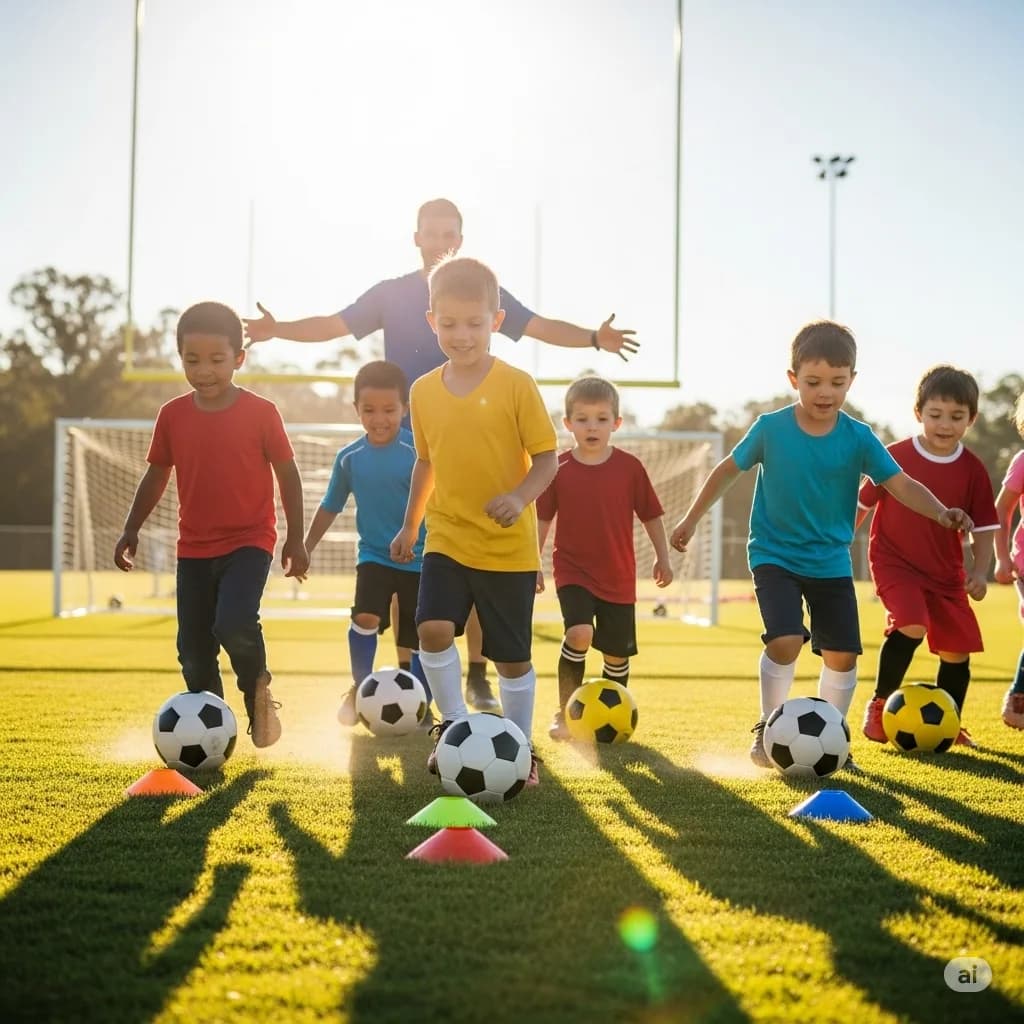
- Arrival (5 mins): As players arrive, have them start by simply dribbling a ball around the practice area. This avoids having kids stand around waiting for others.
- Introductions (2 mins): Gather the players in a circle. Quickly introduce yourself and have each player say their name.
- Warm-Up Game: Sharks and Minnows (3 mins): A classic and fun game that gets everyone running. The “minnows” (players with balls) try to dribble from one side of a marked grid to the other without having their ball kicked away by the “shark” (the coach, or a parent volunteer).
2. The Skill of the Day: Dribbling (15 Minutes)
For the first practice, focus on the most fundamental skill: keeping the ball close.
- Drill 1: Red Light, Green Light: Players start on one line. When you yell “Green light!” they dribble forward. When you yell “Red light!” they must stop the ball with the sole of their foot. This teaches control.
- Drill 2: Follow the Leader: Have the players form a line behind you. Dribble around the field in random patterns—zig-zags, circles, fast and slow—and have them mimic your every move with their ball.
3. Fun Game with the Skill (15 Minutes)
Now, turn the skill they just learned into a competitive and fun game.
- Game: Dribble Knockout: In a marked grid, every player dribbles their own ball. The objective is to protect your own ball while trying to kick other players’ balls out of the grid. The last player with a ball wins. This game is a favorite because it teaches players to dribble with their heads up.
4. The Scrimmage (15 Minutes)
This is what every kid is waiting for. Let them play!
- Setup: Use cones to create two small goals and split the team for a small-sided scrimmage (3v3 or 4v4 is ideal). If you have a lot of players, run two small games simultaneously.
- Coaching Point: Don’t worry about positions or complex rules. Just encourage them to use the dribbling skills they learned and give lots of positive reinforcement.
5. Cool-Down & Wrap-Up (5 Minutes)
End the practice on a positive and organized note.
- Gather the team: Bring the players together for a final huddle.
- Ask questions: Ask them “What was your favorite part of practice?”
- Give praise: Point out one or two things the team did really well.
- Team Cheer: End with a loud, fun team cheer.
From a Great Practice to a Great Game
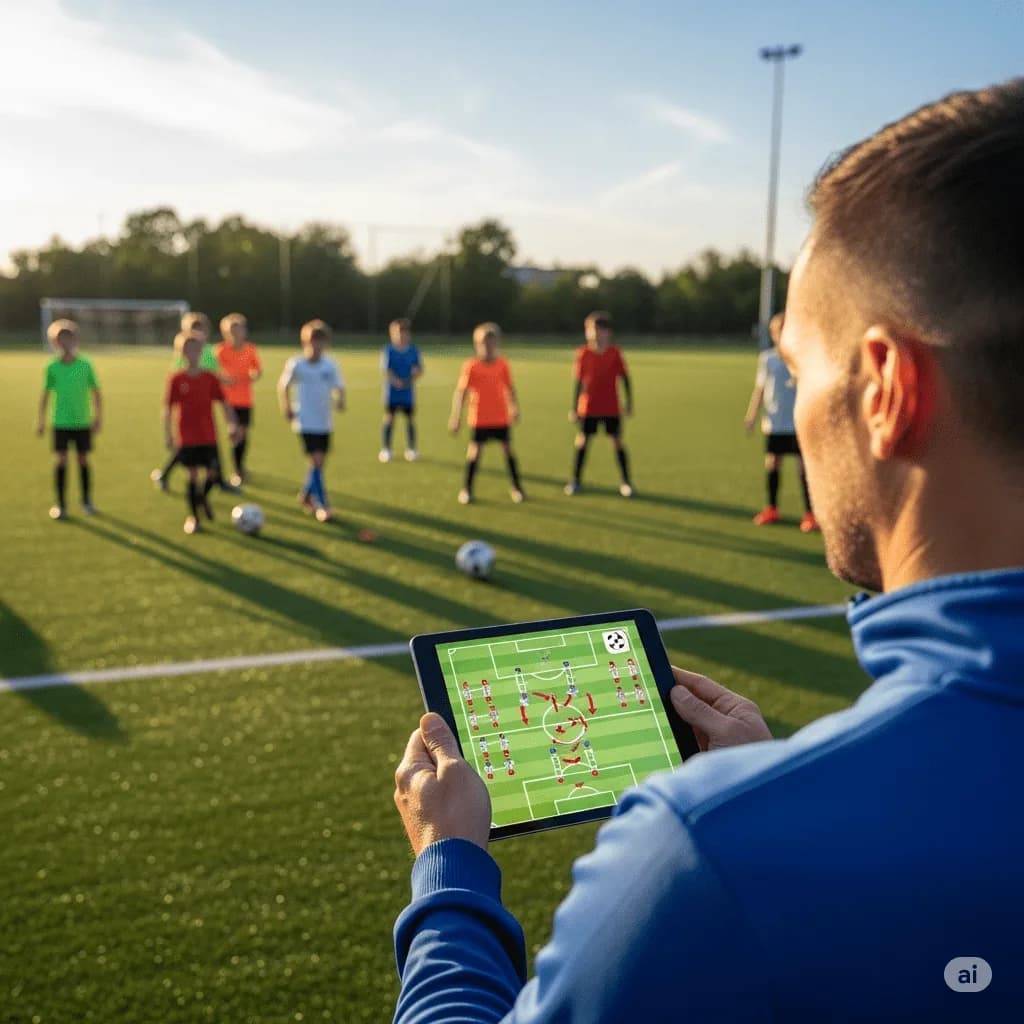
Just as a clear plan reduces the stress of your first practice, a great plan is the secret to a smooth and successful game day. Once you’ve coached your players on the field, you want to be able to focus on them during the match—not on a messy clipboard or a confusing substitution schedule.
That’s where an organized system like Substitution Cavalry comes in. By handling the complex logistics of rotations and fair playing time, SubCav allows you to apply what you taught in practice to the real game, giving every player the attention and guidance they deserve.
Ready to organize your game day?
Coaching is hard enough
SubCav builds your substitution plan, tracks every player’s minutes, and lets parents follow the game live. Free for every coach.
Get the App